
Hormonal Transitions: Menopause, Andropause & Why Cholesterol Changes
Hormonal Transitions: Menopause, Andropause & Why Cholesterol Changes
Aging is inevitable—but how we age is a choice. One of the most profound yet often misunderstood shifts in our health occurs during midlife hormonal transitions.
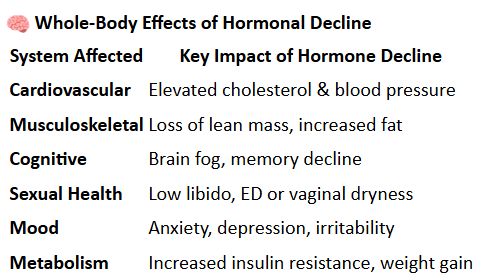
For women, this transition is known as menopause, and for men, it’s andropause—both signaling a significant shift in hormone production. These changes don’t just affect mood or libido; they impact everything from cholesterol levels to body composition, brain function, and cardiovascular health.
Let’s explore the science behind these transitions, what they mean for your health, and how you can take proactive steps toward full-body optimization
What Is Menopause?
Menopause marks the end of a woman’s reproductive years, typically occurring around age 45–55. It involves a natural decline in estrogen and progesterone, hormones that play a vital role in metabolism, bone density, heart health, and cognition.
Common Symptoms:
Hot flashes and night sweats
Mood swings and brain fog
Weight gain (especially around the belly)
Loss of muscle mass and libido
Increased cholesterol and blood pressure
What Is Andropause?
Men don’t experience a sudden hormonal drop like women, but testosterone begins to gradually decline after age 30, dropping by about 1% per year. By the time a man hits 40–60, symptoms of andropause can become noticeable.
Common Symptoms:
Low energy and fatigue
Reduced muscle mass and strength
Increased abdominal fat
Decreased libido and sexual performance
Elevated LDL cholesterol and cardiovascular risk
Why Do Cholesterol Levels Go Up?
One of the most critical but overlooked effects of hormonal decline is its impact on lipid (cholesterol) profiles.
Estrogen and Testosterone = Cholesterol Regulators
Both hormones have protective effects on your cardiovascular system:
Estrogen helps keep LDL (“bad” cholesterol) low and HDL (“good” cholesterol) high.
Testosterone supports metabolic health, reduces insulin resistance, and helps regulate triglycerides.
When these hormones decline:
LDL cholesterol increases
HDL may decrease
Triglycerides may rise
Arterial stiffness increases, raising blood pressure and heart disease risk
So, that annual physical that just says your “cholesterol is a little high” might be masking a deeper hormonal issue.
Your First Step: The XH Deep Dive
If you're starting to notice these shifts in your 40s, 50s, or beyond—don't settle for generic advice or one-size-fits-all care.
Our XH Deep Dive is a comprehensive hormone and metabolic optimization service designed to uncover the root causes behind your symptoms and build a personalized path forward.
What’s Included in the XH Deep Dive:
DEXA scan – To assess body fat, visceral fat, bone density, and lean muscle
Extensive blood work – A full-spectrum panel covering hormones, lipids, inflammation, thyroid, metabolic health, and more
Expert lab review – We go deep into your results—not just “what’s normal,” but what’s optimal for YOU
Personalized protocol – Including tailored supplement, lifestyle, and therapeutic peptide recommendations based on your labs and goals
Book Your XH Deep Dive Today
This isn’t just testing—it’s the launchpad for your entire health optimization journey.
Book your XH Deep Dive here
Take the first step toward optimized health, performance, and longevity—powered by science-backed peptides.
Whether you’re navigating menopause, andropause, or just want to get back to feeling sharp, lean, and energized—it starts with the right data, and the right plan.